

Normalizing Non-Normativity and the Masculinization of Unlikeable Women in HBO’s Girls
Girls is [...] a landmark in the modern media landscape in its normalization of that which was previously swept under the rug by television’s idea of a woman: the uncomfortable reality of a 20-something-year-old middle-class white girl’s life. In televising authenticity, Girls standardizes ‘unlikeable’ behavior and life experiences which previously appeared outlandish or even crude as a direct result of the history of straight white women in television, framed by the gender performance of its girls.

Khutsiev in Transition: Postmemory and Fragmentation from the Soviet Thaw to Stagnation
The long Soviet sixties and the Khrushchev Thaw were a particularly singular time. The temporary liberalization of Khruschev’s censors allowed for filmmakers to interrogate the conditions of the postwar USSR in ways that would have been unthinkable during the Stalin years; and yet, the overwhelming social malaise of the generation led to those portrayals taking on a distinct tone of anxiety, fragmentation, and purposelessness.

The Power of an Edit: Reality TV Wants You To Go Insane
"Reality television, including Love Island UK (2005–), Love is Blind (2020–), and Perfect Match (2023–) expand to a Marvel Cinematic Universe level of lore and, as a result, continually lose millions of viewers every season. [...] The formulaic nature of competition shows with constant variables, such as cooking shows with repeated challenges, rely on editing portraits of individual personalities to keep audiences engaged. These shows continue to stay on air by imitating themselves; however, there is still spirit in these contestants."

Digital Identification in Dottie Gets Spanked (1993)
"By drawing pictures, dreaming of [Dottie], and sitting glued to the television after school, Steven participates in Mulvey’s understanding of cinematic identification. His idealization of Dottie, which manifests as desire, reinforces Lacan and Mulvey’s complementary beliefs that identification, at least through an experience like the mirror stage, is never a particularly whole process–otherwise determining the subject one identifies with as detached from the original spectator."

“Neither Painful Nor Pleasant, Neither Easy Nor Difficult”: On the Audiovisual Ghosts of Colonial Malaise in Marguerite Duras’ India Song (1975)
"This sense of repression, which comes with an accompanying boredom, is what seizes Duras’ film, rendering it as an oppressive and intolerable portrait of the banality of the Western colonial project from the perspective of those stationed abroad. It is thus, from this historical vantage point, that we can interpret the film as less so a film about actual, existing people as much as it is a film about the ghosts of Western colonialism."
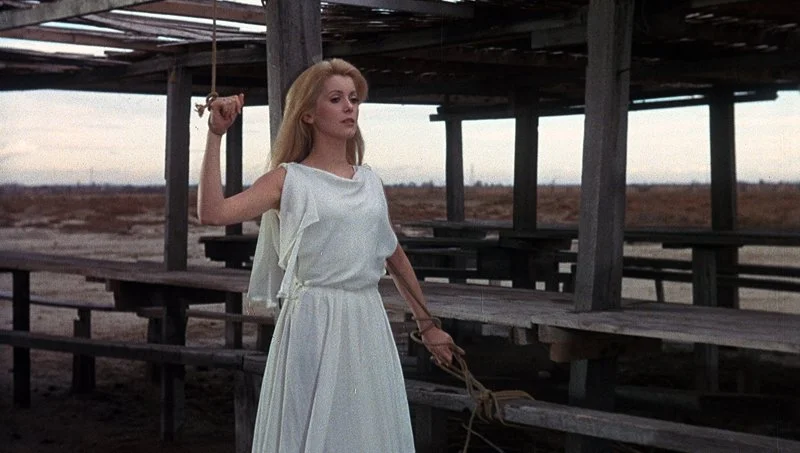
Comparing Laura Mulvey’s Essay, “Visual Pleasure in Narrative Cinema” to Luis Buñel’s Film, Belle de Jour
"Depictions of women expressing unique sexual desires are not unilaterally patriarchal: Buñuel makes it clear that they are not inherently castrated, but are repressed in their expression by the dominant structures that Mulvey diagnoses. Reflecting patriarchal dominance over female sexuality, the male characters in Belle de Jour control the film’s narrative. Even as the male characters are dictating the narrative, Severine dictates the perspective from which we view the narrative. Buñuel does this intentionally in order to further the audience’s sympathy for Severine and her feelings of powerlessness."

Reaching Across the Gap: I Saw the TV Glow Provides Connection Across Identities
In a world of instant messages, videos, and films seen by millions across the world at the same time, we are not truly connected to one another until we attempt to understand somebody experiencing life differently from ourselves. I Saw the TV Glow uses technological symbolism to perfectly encapsulate the queer journey and what it means to not only see your truth, but to accept it, and be willing to show the world.